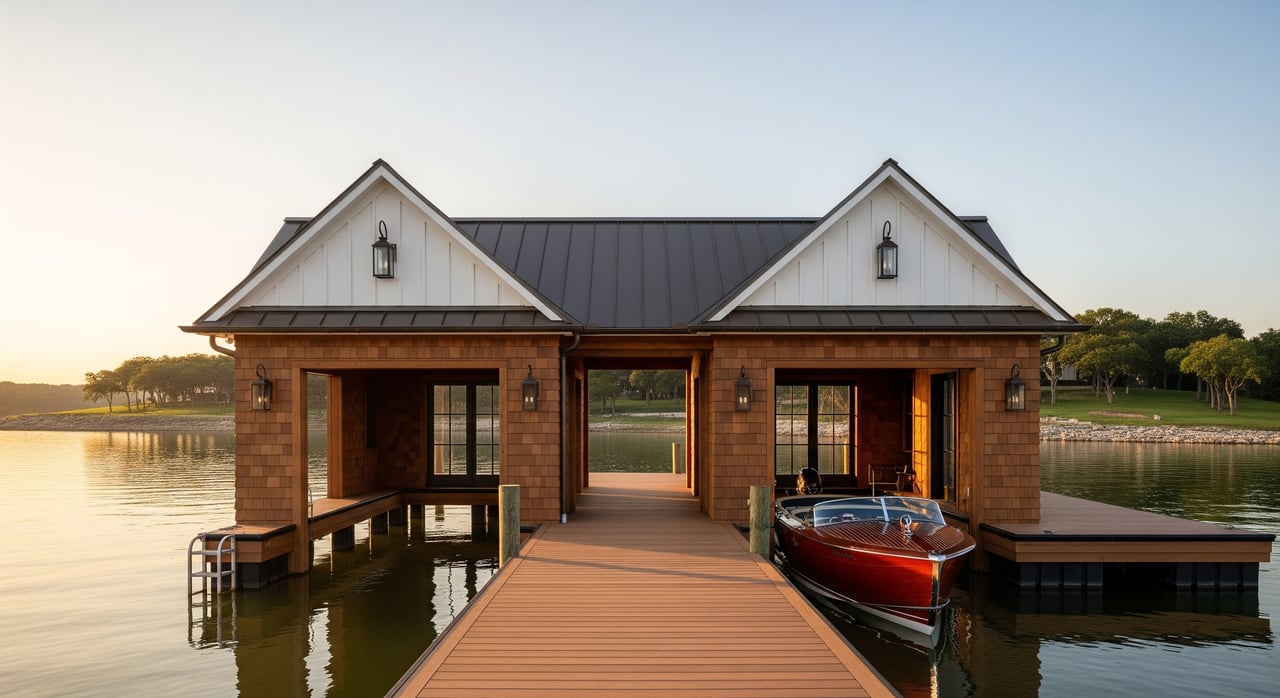
Thinking about a boathouse at Cedar Creek Lake but not sure where to start? You are not alone. Between lake rules, local permits, and HOA covenants, the process can feel confusing. In this guide, you will learn how permitting works around Mabank in Kaufman County, what documents you will likely need, how long approvals take, and the key pitfalls to avoid. Let’s dive in.
Who permits boathouses and docks
If your project touches the lake or lakebed, the reservoir authority’s shoreline or permit office is typically your first call. This authority manages Cedar Creek Lake and sets the rules for any structure in or over the water. Their approval is often required for docks, covered slips, enclosed boathouses, and any attachments to the lakebed.
Next, confirm your property’s location. If you are inside the City of Mabank, city building and zoning rules apply. If you are in unincorporated areas, Kaufman County building and floodplain rules apply. Either office may require building permits, inspections, and compliance with local construction standards.
Some projects can trigger state or federal involvement. Work that includes dredging or filling may need review under U.S. Army Corps of Engineers permits. Floodplain rules often reference FEMA maps and can require specific elevation or anchoring methods. If you live in an HOA or POA, their architectural rules may be more restrictive than public rules, so review those early.
Structure types and how rules change
Docks and piers
Simple fixed or floating docks are often the most straightforward. They still require review for placement, setbacks from property lines, and safe navigation clearances.
Covered slips and roofed docks
Adding a roof shifts the project into a more regulated category. Expect more detailed plans and stricter size or placement standards than an open dock.
Enclosed boathouses
Walls and enclosed areas usually bring the highest level of scrutiny. These structures often need engineering review and may be restricted in certain zones or near navigation channels.
Dredging or shore work
If you plan to deepen water, create a basin, or place fill, you are likely to need separate environmental reviews. This can add time and may involve federal and state agencies.
Temporary or removable systems
Personal watercraft docks and seasonal or removable components may be simpler to approve. They must still meet placement and safety rules.
What a permit application usually includes
You can save weeks by preparing a complete package from the start. Common items include:
- Survey and legal description showing how your lot meets the shoreline or high-water mark.
- Site plan with dimensions, distances from property lines and neighboring structures, and location relative to navigation channels.
- Structural drawings with materials, anchoring details, floats or piles, and stamped engineering for larger or enclosed structures.
- Environmental information for dredging or filling, such as erosion-control plans.
- Proof of ownership and any HOA or POA approvals if covenants require them.
- Insurance certificates or indemnity agreements if the authority requires them.
- Required forms and fees for the reservoir authority and city or county offices.
Review steps and realistic timelines
Your plans typically go first to the reservoir authority for shoreline review. If you are inside Mabank or in Kaufman County, submit to the appropriate building and floodplain offices as well. Some projects, especially variances or larger structures, may require public or neighbor notice.
Projects that alter the lakebed or affect wetlands may require additional review. If dredging or filling is involved, expect possible federal and state coordination. Engineering review is common for enclosed or complex boathouses.
Timelines vary. Simple floating docks can move in a matter of weeks. Covered or enclosed boathouses, or anything involving dredging, can take several months. Build in extra time for coordination among multiple agencies.
Ownership rights and limits to verify
Lakefront ownership does not always mean you control the lakebed. Many reservoirs reserve the land below the high-water line to the managing authority. If your structure occupies that space, you may need a lease or easement in addition to a permit. Verify where your deed ends and what the authority controls.
Your deed may mention riparian rights, access easements, or limitations. Lack of specific rights can limit what you can build. HOA or POA covenants can further restrict size, design, materials, and use. Review them before you design.
Floodplain rules can set elevation or anchoring standards. Insurance can also be affected. Some boathouse uses may not be insurable, and many authorities prohibit any use that looks like permanent living quarters. Expect liability to rest with the permit holder for damage caused by the structure.
Safety, environmental, and maintenance essentials
Fuel handling and storage are tightly controlled to protect water quality. Do not assume you can fuel boats from your boathouse. Shoreline protection rules may require native vegetation buffers and erosion controls. Hardening the shoreline with bulkheads or riprap is often limited or reviewed closely.
Design for wind, wave action, and high water. Some authorities require that floating units be removable or secured for seasonal or storm conditions. Navigation safety guidelines may set clearances, lighting, or marking requirements. As the permit or lease holder, you are responsible for maintenance and removal if the structure becomes unsafe or is abandoned.
Buyer checklist before you make an offer
- Get the deed, plat, and any recorded easements to understand where your rights end.
- Ask the seller for copies of existing lake permits, leases, approvals, and inspection records for the dock or boathouse.
- Request HOA or POA rules and any prior architectural approvals.
- Call the reservoir authority’s shoreline office to confirm that existing structures are permitted and transferable, and to learn limits on new work at that parcel.
- Confirm whether the property sits inside Mabank city limits or in Kaufman County and check permitting and floodplain rules accordingly.
Seller checklist before you list
- Gather permits, leases, plans, and inspection sign-offs for any docks or boathouses on the property.
- Pull HOA or POA approvals and design reviews.
- Verify that any prior work matches approved plans and that renewals or leases are current.
- Note any maintenance or safety items and address them before showings.
- Keep a clean file with approvals and records to share with buyers.
Planning a new boathouse step by step
Confirm jurisdiction. Identify whether you are inside Mabank or in Kaufman County and whether the reservoir authority controls the lakebed at your shoreline.
Start with concept and survey. Hire a local surveyor to mark property lines and show the high-water line. Sketch a concept showing location, dimensions, and clearance from neighbors and channels.
Engage local experts. Bring in a contractor or marine engineer with Cedar Creek Lake experience. Ask them to coordinate early with the reservoir authority on standards and design.
Prepare your application. Include survey, site plan, structural drawings, proof of ownership, HOA approvals if needed, and any required insurance documentation.
Call 811 before construction. Mark utilities and coordinate access so materials and equipment do not damage neighbors or public spaces.
Align on inspections. Schedule pre-construction meetings with inspectors and confirm milestones for framing, anchoring, electrical, and final sign-off.
Keep records. Maintain copies of permits and inspection results. They will matter when you refinance or sell.
Common mistakes to avoid
- Assuming shoreline ownership means unrestricted building rights. Always verify lakebed control and riparian rights.
- Starting construction before permits are approved. This can cause delays, fines, or removal orders.
- Skipping HOA or POA approvals. Private covenants can be stricter than public rules.
- Underestimating timelines. Multi-agency review can add months, especially for enclosed boathouses or dredging.
- Overlooking floodplain and insurance. Anchoring and elevation requirements can drive design choices and costs.
What this means for your sale or purchase
A permitted, well-built dock or boathouse can boost a lake home’s appeal. Buyers look for compliant structures, clear paperwork, and practical features that fit how they plan to use the lake. On the flip side, unpermitted or unsafe structures can slow a sale or reduce offers. When your plans match the rules, you protect value and avoid surprises.
Lean on local guidance you can trust
You do not need to navigate this alone. Whether you are buying a waterfront home, evaluating a boathouse-ready lot, or prepping your property to list, local know-how saves time and stress. For step-by-step help, market insight, and introductions to trusted surveyors and marine contractors, connect with the Debbie French Real Estate Group. We live the lake lifestyle and guide you with clarity from first call to closing.
FAQs
Who to contact first about Cedar Creek Lake permits
- Start with the reservoir authority’s shoreline or permits office, then verify building and floodplain rules with the City of Mabank or Kaufman County based on your property location.
Whether shoreline ownership guarantees a boathouse
- No. The authority often controls the lakebed below the high-water line, so permits or leases are usually required in addition to your upland ownership.
If enclosed boathouses are typically allowed at Cedar Creek Lake
- Enclosed boathouses face stricter review, may require engineering, and can be restricted or prohibited in some areas or near navigation channels.
Expected timeline for dock or boathouse approval
- Simple floating docks may approve in weeks, while covered or enclosed boathouses or any dredging projects can take several months due to multi-agency review.
How a boathouse can affect property value when selling
- A permitted, well-maintained structure can attract buyers, but non-compliant or unsafe structures can reduce marketability and may trigger repair or removal requirements.